
Disability Representation in Children’s Books Isn’t the Problem. Invisibility Is.

I recently came across an article so utterly ridiculous that I had to read the headline twice.
Published by Spiked on October 21, 2026, the article was titled, “Why does almost every character in children’s books now have a disability?”
My first thought? What an idiotic question.
My second? How incredibly privileged must someone be to view the presence of children with disabilities in books as a problem?
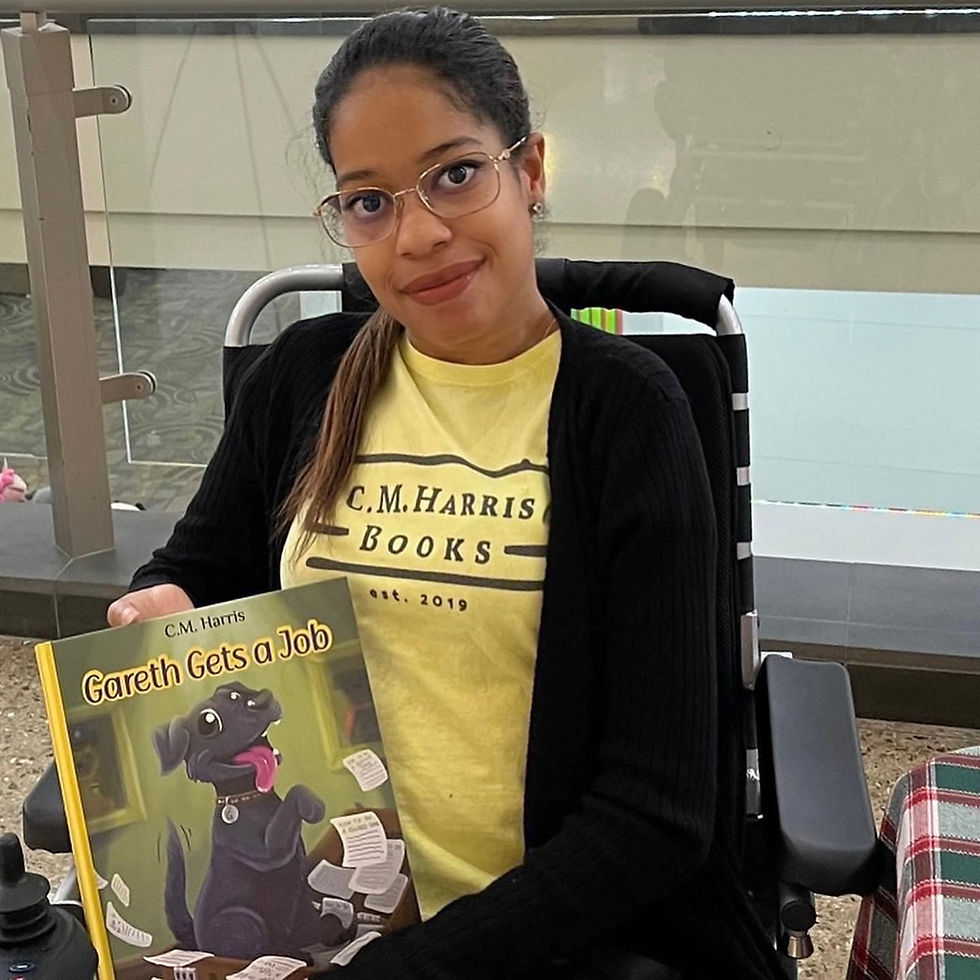
As a children’s book author, publisher, and woman living with Charcot-Marie-Tooth disease, I find this perspective not only frustrating but deeply concerning.
For generations, children with disabilities have been overlooked, underestimated, and excluded from the stories that shape how young readers understand the world. Now that we’re finally seeing more representation, we’re supposed to believe there’s too much of it?
Too much representation? According to whom?
The article suggests that children’s publishing has become overly concerned with diversity and inclusion, implying that characters with disabilities are being inserted into stories to satisfy some unwritten checklist.
But here’s what I want people to understand: Children with disabilities are not diversity checkboxes. They are children.
They have friendships. They attend school. They celebrate birthdays. They experience disappointment, excitement, curiosity, and love. They deserve to see themselves participating in the same adventures as everyone else.
And they shouldn’t need an explanation for being there.
A child in a wheelchair doesn’t need an entire storyline about why they use a wheelchair. A child with a hearing aid doesn’t need to teach the other characters a lesson about hearing loss. A child with a visible disability can simply exist in a story without their disability becoming the central focus.
That is what genuine inclusion looks like.
I Know What Invisibility Feels Like
Living with Charcot-Marie-Tooth disease has given me a perspective that cannot be learned simply by observing illustrations in children’s books.
I understand what it means to navigate a world that wasn’t necessarily designed with people like me in mind. I know what it feels like to be underestimated, to encounter assumptions about my abilities, and to have to advocate for accessibility and equal opportunities.
And I know how powerful it can be to finally see someone who looks like you represented in a space where you’ve rarely been visible.
When I founded Purple Diamond Press, I wanted to publish books that make a difference. Not books that simply entertain children, but stories that help them understand themselves, appreciate others, and recognize that our differences do not diminish our value.
My What If We Were All™️ series was built around that philosophy.
I don’t include diverse characters because it’s fashionable. I include them because they reflect the world we actually live in.
Disability is not a publishing trend. It is part of humanity.
Children Notice Who Is Missing
Books are often among a child’s earliest introductions to people, cultures, families, and experiences beyond their immediate surroundings.
Imagine being a young child who uses a wheelchair and rarely seeing a character who looks like you.
Now imagine opening a picture book and discovering a child in a wheelchair playing with friends, exploring the world, or participating in an ordinary classroom activity.
That moment matters.
It communicates something simple but profound: You belong here, too.
And for children who do not have disabilities, that same illustration communicates an equally important message: disability is a natural part of human diversity.
We cannot claim to be preparing children for the real world while deliberately excluding people who are part of it.
Inclusion Does Not Require Permission
Do I believe publishers should create authentic, thoughtful characters rather than treating diversity as a marketing exercise? Absolutely.
But that is an argument for better storytelling, not less representation.
What troubles me about the article is the underlying suggestion that the visibility of disabled people has somehow become excessive.
Would we question why so many books feature children who can walk? Why so many characters have two functioning hands? Why so many stories include children without visible disabilities?
Of course not.
Yet when a child uses a wheelchair, suddenly their presence becomes worthy of debate.
Disabled children should not have to justify their existence in literature any more than they should have to justify their existence in society.
We Still Have Work to Do
As a publisher, I see an opportunity and a responsibility to help create a literary landscape in which every child can recognize their worth.
That means developing authentic characters, working with creators who understand the experiences they’re portraying, and ensuring that inclusion extends beyond the occasional book specifically about disability.
It also means recognizing that representation is not a competition. Including a child with a disability does not take anything away from another child.
There is room for all of us.
I want children to grow up in a world where seeing a wheelchair user in a picture book is so ordinary that nobody thinks twice about it.
Not because disability has become invisible again, but because inclusion has become normal.
And perhaps that’s what some people are struggling to accept.
For those who believe there are suddenly too many disabled characters in children’s books, I would encourage you to consider how many generations of children grew up seeing virtually none.
The problem was never that children with disabilities were taking up too much space. The problem was that, for far too long, they weren’t given enough.
And as long as I have a voice in children’s publishing, I intend to keep changing that.
C.M. Harris
Founder & CEO, Purple Diamond Press, Inc.
Author | Disability Advocate | Publishing Books That Make A Difference
⸻
In response to James Dixon’s October 21, 2026, article published by spiked, “Why does almost every character in children’s books now have a disability?”


Comments